Unknown's avatar

About Andy Jervis

Welcome to my blog site. I've spent 30 years building a business - Chesterton House Group - designed to help people to achieve financial freedom, so that's my main interest and the core focus of my writings. True financial freedom isn't just about having enough money to do the things you want, it's about having a great relationship with money so that you can live in balance and get the most out of life. The best advice I ever had was to 'live each day as though it were your last, but plan as though you'll live forever.' I hope you enjoy the blog. Andy

IFP Conference Report 2015 – Day 2, 6th Oct 2015

There was only one standing ovation during the three days of this year’s IFP Conference, and it came from the hearts of those present. It was at the moment when special acknowledgement was given to Nick Cann.

Nick is one of those guys you have to love. His enthusiasm for the Institute and it’s role in changing people’s lives through the delivery of great financial planning has been inspiring to everyone who has met him. And during his decade long reign as Chief Executive of the IFP, that’s a lot of people as he toured the country regularly meeting members at Branch Meetings, appearing in the press and wider media as one of the primary representatives of the financial planning profession, and steering the Institute as it has gathered mass, influence and skill.

That was until nearly two years ago, when Nick suffered a massive stroke that robbed him of the use of his right arm and left him struggling to communicate. To say that this was a body blow to the organisation he led is a ridiculous understatement, and it was clear what a dramatic effect his sudden illness played on not only the small team of permanent staff that surrounded him, but on the Board members and the wider IFP community who held him in such regard.

The recently announced merger with the CISI has meant the breakup of that team as the operation moves to its new London home from Bristol, a commuting problem too big to swallow for most of them. It was partly for that reason that, when long=standing IFP stalwart Julie Lord gave her tribute to Nick’s huge influence, the whole hall rose to its feet in support of her words. It was a poignant moment.

It had been a long day, with an early breakfast required to be able to catch the first concurrent sessions of the day starting at 8.15 am. I chose to learn about ‘Why Online Advice is the Next Evolution for Financial Professionals’, a thought provoking analysis of trends in the way people receive and process information. There is much talk in the profession about the dawn of ‘robo-advice,’ where people can get the answers they need without human intervention. The speaker assured us that all of their research and practical experience shows that, whilst computers can handle the delivery of key information and illustrate strategies, the vast majority of people of all ages still wish to speak to an experienced person to validate their buying choices before they push the button. However people are increasingly taking their first steps towards building their financial plans, arranging investments and insurance, and sorting out their tax online, and it’s definitely an area that Chesterton House needs to be involved in to deliver the results for our clients that they desire. We’re already looking at some exciting ideas in this area and this session helped point towards some resources that I’m sure we’ll find useful.

The first plenary session speaker was new IFP President Alan Dick, who spoke with great passion about the work of the Institute and it’s people, the possibilities as well as the concerns for the future as part of the CISI, and reminded us that ‘financial planning is the glue – the context – that holds everything else (in people’s lives) together.’ His tenure promises to be inspired.

Steve Groves of Partnership Assurance was up next, talking about ‘Retirement’, a subject at the heart of most people’s financial plans.

Steve talked about the current consultation into pension tax relief and the possible reforms that might ensue. He compared the current EET model – Exempt contributions, Exempt fund, Taxed benefits – with a TEE approach whereby contributions are taxed (i.e., no tax relief), your pension fund continues to be exempt from tax, but future benefits (your pension drawings) are exempt. We already have this structure in place, it’s called an ISA and there has been talk about pulling pensions and ISAs together into one ‘product.’ There are some obvious disadvantages from this approach that were highlighted by Steve, and it was thought provoking to hear his analysis.

Steve also spoke about the new pension freedoms, and the need for people to manage their retirement planning successfully. There had been a lot of talk, he said, about rising life expectancy but pointed out that if all men budgeted on living to age 87 (the average expected age at death for a male in the UK), then half of them would run out of money. He also suggested that many people with small, medium and large pension funds would live in poverty, scared to spend for this fear. As always, good money management is less about logic and more about managing your emotions.

The next speaker, Andy Bounds, had us all out of our chairs and pointing objects out to each other. His creative and often hilarious presentation showed how to make a good impression, and how to focus on what’s important to the other person – a major theme of our work at Chesterton House. Nobody is impressed if you’re great, he told us, but people are highly impressed if you make them great. The exercises he suggested to achieve this were simple yet memorable and effective, and his talk went down well with this audience.

 Next up was the inspiring Dr James Rouse. We had met James when he spoke to last year’s Conference, and he told us how pleased he was to return. James’ theme was Mastery over Mind and Body, and in his very full talk he explained the importance of gratitude in living a great and long life. Be aware of silent gifts; a tasty breakfast, a warm shower, walking in the rain; and ask what gives you ‘irrevocable joy?’

James went on to describe techniques for self-discipline, exercise and diet that have been shown to help people live to age 100 and beyond, and told inspiring stories of centenarians running marathons to demonstrate that such mastery can yield dramatic results. He’s a very interesting man with an important and relevant message, I recommend you experience his ideas at www.drjamesrouse.com. If James’s energy and enthusiasm were indicators then his stuff definitely works.

After lunch I attended a session with Rob Stevenson of Kingmakers who talked about ‘The Financial Planner as a Business Consultant.’ Rob works with firms to identify, manage and overcome problems and get things done. There’s an obvious crossover with financial advice, where I’ve many times got involved in helping clients to talk through business issues in order to break through to higher levels of wealth. Rob explained the difference between consultancy and coaching, and the times when such help can be needed in the lifecycle of a business. He made some interesting points. For example, he suggested that it takes approximately 10 years to build a succession plan, something which I realise is correct on reflection.

With the traditional Gala Dinner in the evening this was a very full day, and a productive one. The value in these events is often in the conversations one has with fellow professionals in between sessions, and this was no different. If you’re a practising financial planner, or aspiring to be one, I strongly recommend that you get along to next year’s IFP Conference. You won’t regret it.

IFP Conference Report 2015 Day One

As a long-standing member of the Institute of Financial Planning I have always enjoyed attending the Annual Conference, held for the last few years in the luxurious surroundings of the Celtic Manor Resort in Newport. Today is the first day of the Conference and it’s already provided plenty of meaty food for thought.

I first got involved with the IFP in the early 1990’s, and much of what Chesterton House now practices has been learned from that long association. Members have always been generous in sharing ideas, and I’ve been highly impressed by their dedication to delivering great results for clients as well as wanting to know how to run highly effective businesses – two things that go hand-in-hand.

Twenty years ago the Annual Conference was held at Cambridge University, a mark of the aspirations of the leading players in the Institute at that time, during an era when salesmanship was much more highly prized by financial institutions than academic rigour. Since then, the regulators have imposed the need for learning on to advisers in the form of the RDR, which brought in the requirement for financial qualifications for anyone giving advice to the public. Many of the old school decided that was a time to leave the business, but for the IFP it felt like its time had come. With a burgeoning need for high quality advice from a wealthier, older and more time-pressured population facing an ever more complicated world, the IFP’s blend of holistic financial planning skills, high integrity and focus on long-term relationship based business models is proving successful for those practitioners who choose to follow it.

The Conference is the annual coming together of advisers and financial professionals seeking the latest ideas and techniques, as well as to enjoy the camaraderie of ‘front-line’ practitioners. It’s always an inspiring event and this year is proving no different.

We began this morning with a session specifically designed for members of firms holding the Accredited Financial Planning Firm designation, of which Chesterton House is proud to be one. An overview of a member survey that gave us some useful benchmarks on which we could measure our respective firms performance was followed by an excellent talk by Nicky Simonds-Gooding of Gazing Performance Systems about how to raise your performance in an increasingly pressurised world. Nicky taught us to use the Samurai principle of the ‘Double Gaze’ – being able to focus intensively on specific details whilst still having an eye on the Bigger Picture, something that resonated strongly with our approach at Chesterton House. She went on to remind us that the High Performance mind set says that however good we are, we can always improve, and suggested some techniques for generating that improvement. Inspiring stuff.

The Institute’s AGM was followed by a session discussing the future of the IFP, which has just agreed to merge with the Chartered Institute of Securities and Investments, a much larger body with an academic base. This has been a big deal for IFP members and, amongst general approval of the potential benefits of the deal, there was concern that the unique qualities of the IFP might be subsumed into the CISI over time. We were assured that wasn’t going to happen, and members were reassured by the obvious enthusiasm for the idea of an expanded organisation being able to spread the word about what real financial planning is and its potential to change people’s lives.

The next session asked, ‘Does Size Matter,’ with leaders of small, medium and large financial planning firms discussing how to continue to deliver a consistent client experience and the highest quality advice as firms grow. This is something that’s particularly relevant to me in my role as Chairman of Chesterton House as our own growth continues, and there were some useful observations from the panel that I noted down.

The next session from Alison Broadberry of Charles Russell Speechlys Solicitors explored the area of Estate Planning for Business Owners. This was another topic of great relevance to me as our Legal Team develops its role in working with families and successful business people to ensure that their assets end up where they intended. Alison explained how a ‘Company Will’ can be used to create certainty for business owners faced with the death of a partner or owner, as well as ways to use trusts to protect business assets on death and massively reduce tax bills. The session was a helpful reminder of these ideas that will be useful when advising clients who are in this situation.

The final session from Michael Langerup of ETF Securities asked, ‘What’s So Smart About Smart Beta’. This was a talk aimed at the investment geeks among us, investigating as it did the market for passive investments based on Exchange traded Funds (ETFs) and the differences between them. If you’re really interested in Systematic Factor Strategies based on key macro risks as a way to diversify your portfolio I’ll be happy to speak to you separately. Or send you to see Michael.

With a lively exhibition area used as a meeting and eating venue for the evening it was great to catch up with some old acquaintances as well as make some new ones. After such an interesting day in a great Conference venue its no wonder some of us keep returning each year.

Tomorrow is an early start as sessions start at 8.15am, and it’s just turned midnight as I write this so I think that’s enough for now. Over and out!


Introducing the Chesterton House App!

We are always looking for ways we can improve the service we offer and that’s why we took the decision to launch our very own App. It’s available to you today and it’s completely free of charge to download. It’s available for iPhone, iPads and Android phones and devices.

What does this powerful little App do?          

The App has been developed by Chesterton House to give you access to key financial data, in real time, whenever you need it, as well as news, information and updates about topics that may affect you.

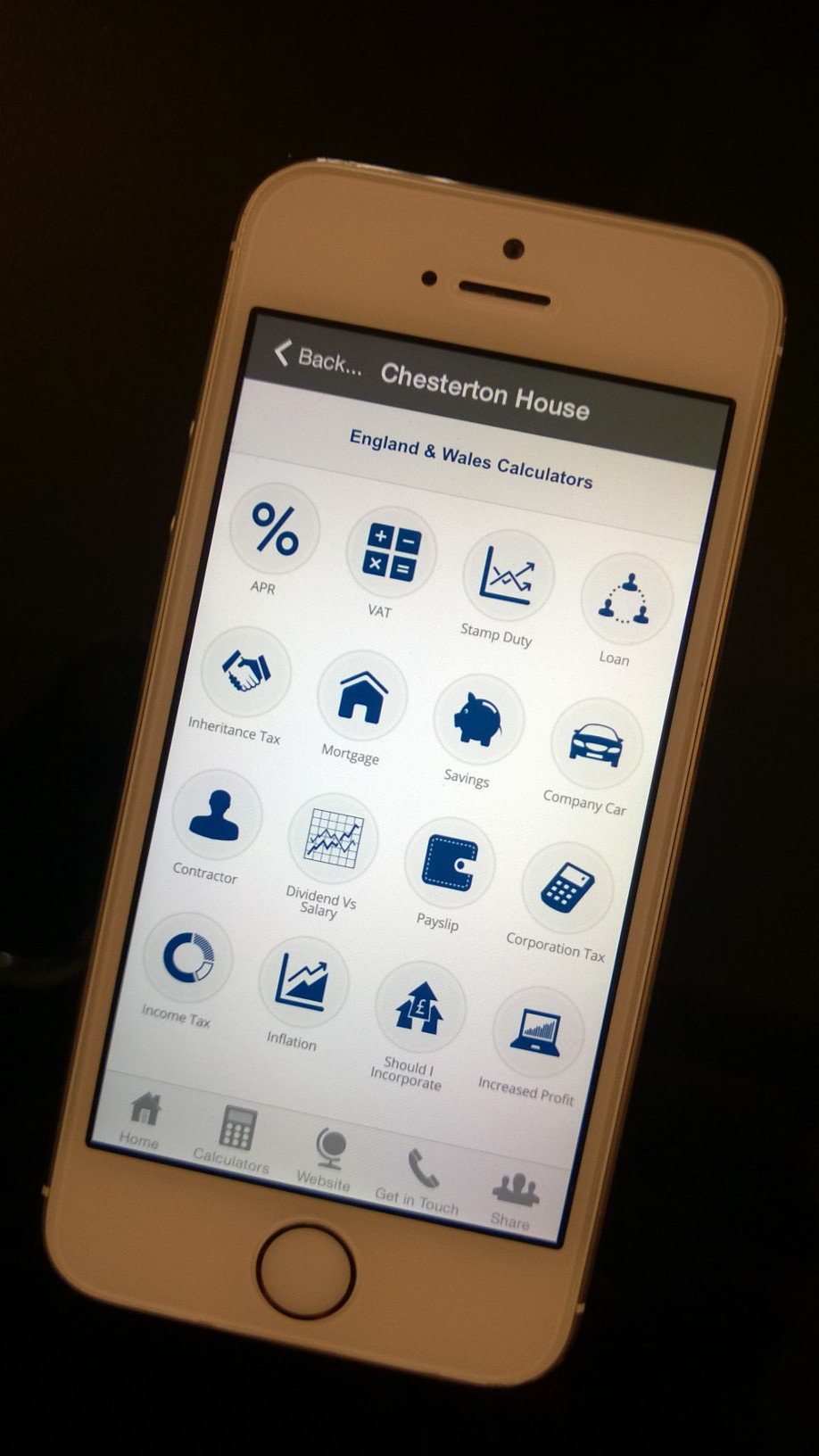
CH App homescreen

It contains a variety of helpful calculators that, among other things, let you calculate the amount of tax you might be paying, work out Stamp Duty costs, quickly check the cost of a mortgage or loan, or see how you might increase your profits as a business.

You can browse the library of tax tables, giving you the latest tax rates 24/7 when you need them. From National Insurance and Inheritance Tax to Income Tax and Tax Credits – it’s there for you.

Photo Receipt Management, Email and Store

Never lose a receipt again! Using the App you can track receipts and expenses literally at the touch of a button. With minimal effort you can take a picture of any receipt and save it to your App. It can help you track all your expenses with ease and, if you’re in business or self-employed, it will enable us to interact electronically with you, saving you loads of time and effort in dealing with your accounts.

GPS Mileage Tracking and Management tool (iOS only)

Using the built-in GPS in your device, the Chesterton House App will automatically help you to track mileage, recording every single trip at the touch of a button, storing them and allowing you to view, edit or email with ease.

Keeping in touch via ‘push notifications’

As your financial adviser, lawyer and accountant we are committed to keeping you up-to-date in the most efficient possible way. The new App enables us to send you important news, deadline reminders and financial updates. And using the App, you can contact us at any time in a way that’s highly convenient for you, as well as view key details about us and our Team.

To download our free App, simply use this QR code directly from your device, or visit the App Store or Google Play Store and search for ‘Chesterton House.’ If you need help just ask!

Chesterton House App QR code

Protecting Your Legacy

Last Wednesday (23rd September, 2015) saw our Team gather together with an audience of around 40 guests at Quorn Country Hotel to consider how to ‘Protect your Legacy’.

Over the course of the morning Nelissa explained why it’s so important to make a Will, Rebecca told us how Inheritance Tax works, how much you’re likely to pay, and various ideas for how to avoid it.

Richard went on to explain how valuable tax reliefs can help reduce your IHT bill, especially in the area of Business Property Relief. Dave went on to cover a range of planning possibilities using trusts to reduce your tax whilst still keeping control over your cash.

We asked the attendees how useful they found the Seminar, and the praise was high. They told us that the morning had been clear and informative, and had given them a new insight into planning for the future. There was also a wide appreciation that everyone’s circumstances are different, and that there is no single solution that works for everyone. You can view some of their comments in this short video.


The final session of the morning gathered a number of the ideas together in the form of a ‘real-life’ case study, the story of one particular Chesterton House client with a long relationship with the firm. Richard and Rebecca explained how, using a combination of financial planning, investing and legal strategies it had been possible to reduce this couple’s eventual tax bill to a tiny fraction of the amount that would have been payable without taking any action, whilst still ensuring that there were ample funds to pay for the care and support that was required for several years towards the end of their lives.

The case study was a great example of how a long-term professional relationship, focused on a person’s needs, goals and objectives, implemented and adjusted regularly over the years as those needs and circumstances change, can bring not only great peace of mind but also real financial benefit. It also highlighted the advantage of financial, legal and accounting professionals working together to get the best outcome for clients – a hallmark of our service at Chesterton House.

If these are topics in which you have an interest, you can start by having a word with our Team. They would be very pleased to discuss your situation with you.

Here Comes The Sun!

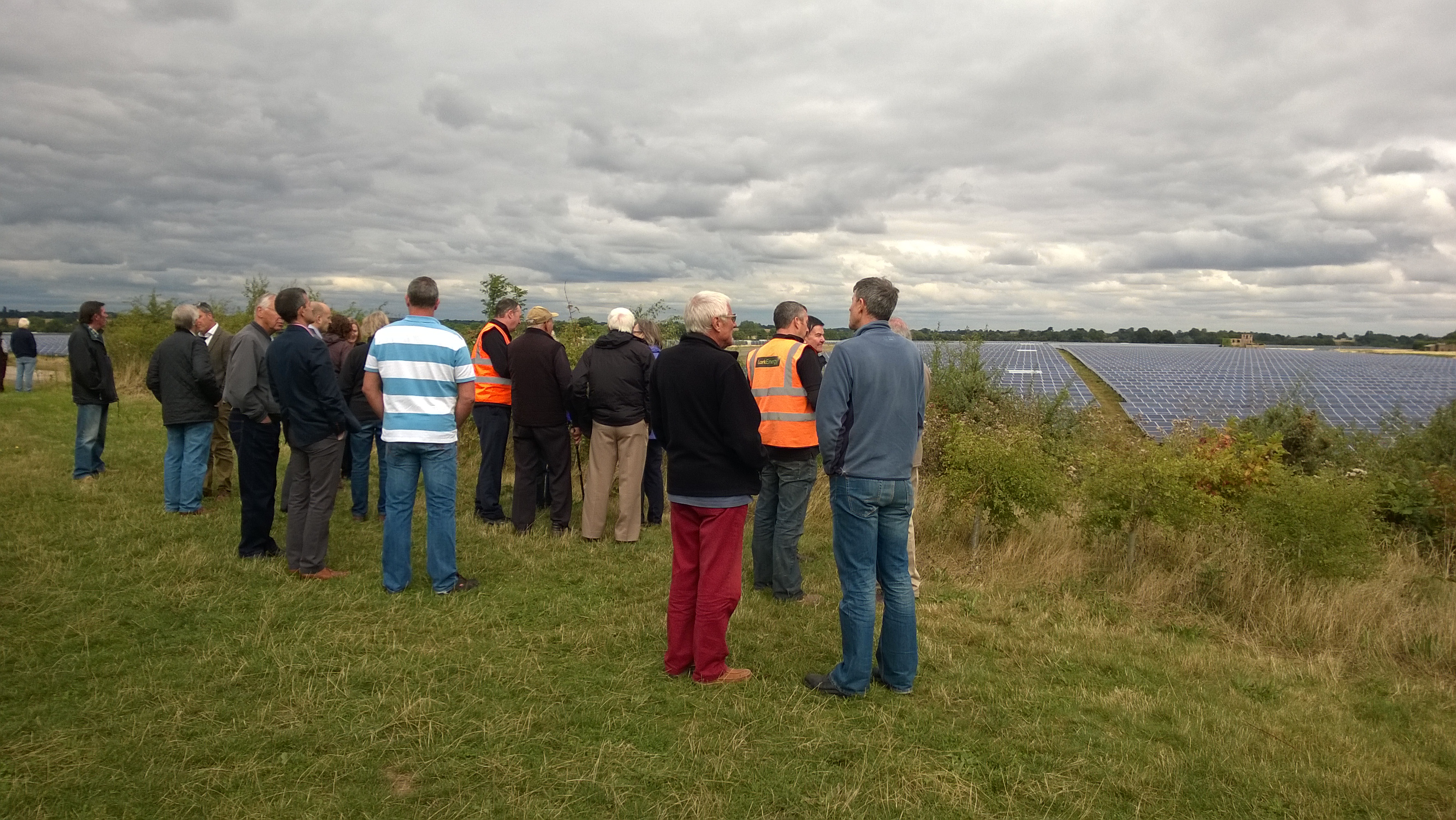
Standing in a large field wearing steel toe-capped boots in a chilly September wind isn’t our usual idea of Chesterton House-style hospitality, but it’s what we and around 30 clients and friends were doing this week. So what was it that had captured our interest?

We were guests of Foresight Investment group, owners of one of the UK’s largest solar energy farms, which happens to be located just a few minutes drive from our offices near the village of Wymeswold.

In fact it wasn’t until towards the end of the visit when the site manager invited our party to climb the small hill that overlooks the former airfield site of the farm that we fully appreciated the scale of this silent power station. Despite being home to an amazing 140,000 solar panels over a 190 acre area, the development is unobtrusive from the adjacent roads and I suspect that few local residents appreciate its scale either.

Looking out over a sea of solar panels

We had earlier been welcomed to the site by Nick Morgan of Foresight, and he had explained the investment merits of this form of energy production, with its stable and highly predictable revenue stream. Richard Urwin, Investment Director at Chesterton House, told the assembled group about the benefits arising from an index-linked income stream and why this farm had been included in our clients’ investment portfolios.

Site manager Arnoud Klaren then went on to share details of the site, how it was constructed, and how it harvests energy from the sun to generate a constant stream of electricity for the National Grid. With a potential output of 34 MW of electricity, the site produces enough energy to power the equivalent of 10,000 homes.

Except, of course, when there is no sun, which remained conspicuous by its absence. The grey skies got greyer, the wind got colder, and the boots got less comfortable as we stood and listened. We were pleased to hear that the panels still generate power even under the very darkest of daylight skies, but we were denied the opportunity to hear the inverter – a large caravan size metal box that turns the solar direct current into the alternating variety required by the grid – really sizzle, as Arnoud assured us it does when the sun shines bright.

It was obvious that the unseasonal chill hadn’t dimmed everyone’s enjoyment of the event, however. Arnoud fielded a wide range of questions with clear and enthusiastic answers, and we all learned a great deal about both the practicalities and problems of modern ‘clean’ energy generation as well as the financial implications involved.

As the world focuses on reducing its carbon emissions this promises to be one area that is ripe for continuing innovation. An obvious problem with solar-generated energy is what happens at night, and Arnoud described some of the ideas that are being developed to be able to create a stable energy stream, from the use of batteries to store surplus power, to using lakes that use surplus power to raise water in daytime allowing it to fall and generate hydroelectric power as required overnight. As the number of alternative energy generators increases, with consequent falls in installation costs, it becomes more economic to investigate these ideas and create workable solutions. Watch this space!

As the cool breeze continued we were pleased to retire to the Windmill Inn in Wymeswold which provided us with an excellent buffet lunch in their welcoming warm surroundings. The comments we received then and since confirmed that everyone had found this an enjoyable and very informative way to spend a morning.

We’re grateful to Foresight for this opportunity, which we may repeat in the spring. If you’re a client of Chesterton House, or you’re interested in the possibilities of using solar power in your portfolio, and you’d like to come along next time please drop Jenny a line at jenny@chestertonhouse.co.uk and she’ll get in touch when we’ve fixed something up.

And let’s hope that next time the sun comes out. I would love to hear that inverter sizzle!


Who Needs A Suntan Anyway?

The rain patters down on the tonneau cover as we sit watching hardy narrowboaters gliding past through the deluge.

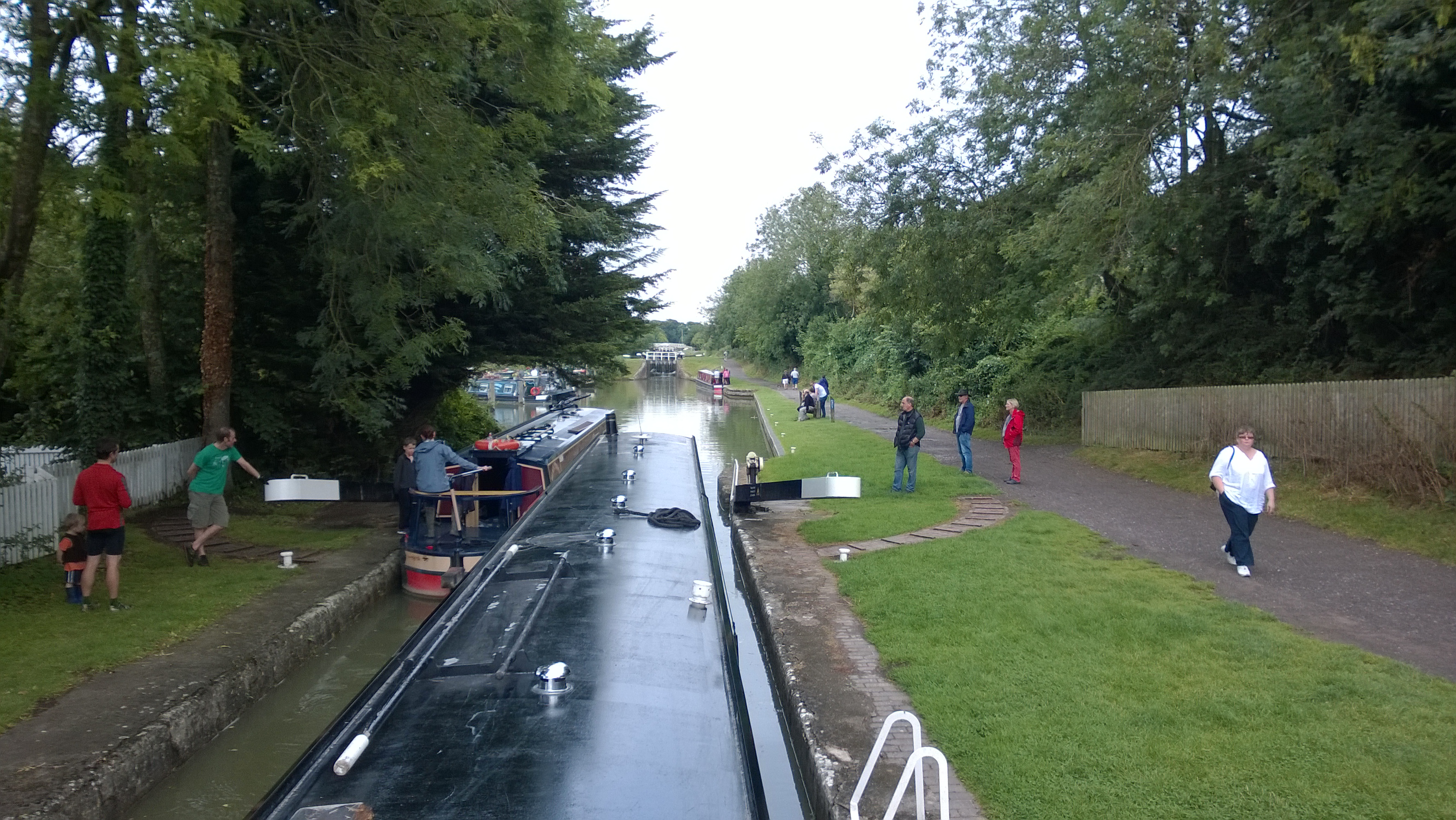
It’s the second time in two weeks that we’ve been afloat on the canals. Last week we hired a 67 footer to navigate the delightful Kennet & Avon waterway from Bath to Devizes and back, and this weekend we’re visiting Dave and Ju on their own boat near Leighton Buzzard on the Grand Union.

The weather pattern has been similar on both trips, with warm and sunny August days transposed with days of torrential rain which makes lock working somewhat less attractive. But hey, this is England and who needs a suntan anyway?

Especially when you’re enjoying the pleasures of the English waterways.

Kennet & Avon Canal

Kennet & Avon Canal

I’ve had a fascination with our canal system ever since Sue introduced me to it in the mid 1970’s. A journey by narrow boat offers a unique and highly intimate perspective on our countryside, towns and cities, as well as a window into our recent industrial past.

The rise, fall and regeneration of this man-made network of communication is the story of the industrial revolution and the subsequent technological advances that rendered canals redundant. The engineering prowess of the early canal pioneers is there for all to see in structures such as the Dundas Aqueduct a few miles out from Bath, with it’s elegant solution to spanning the River Avon below. But it is also testament to the sheer physical efforts of the thousands of navigators – ‘navvies’ as they became known – who formed the pathways for the canals to run on  with their bare hands. Embankments, cuttings, bridges and tunnels were created without the benefit of the huge earthmoving machines that seem to construct modern motorways with hardly a human to be seen.

The accumulation of knowledge was rapid as canal-building technology improved. The early ‘contour’ canals followed the lie of the land, resulting in stretches such as the South Oxford taking it’s leisurely, meandering path from Coventry down towards the Thames. In one place, at Wormleighton, a mile long sweeping bend brings the cut within  a few yards of itself as it seeks to avoid the need to bridge the rolling hills and hollows of the land.

As the canals became more profitable and those profits rose with rapid journey times, later engineers such as Thomas Telford found ways to forge straight through the countryside, compensating for the contours with huge earthworks and dramatic structures, of which the  most striking example has to be the amazing Pontcysyllte Aqueduct near Llangollen.

Of course, like any arterial route, the joy is in the travelling of it, and the canals bring such joy in spades. The locks, an  early engineering solution to hills, have matured into quaint and picturesque places of beauty, activity and camaraderie. Boaters and bystanders alike gather at the side of locks, still inspired by the cleverness of it all, and sharing a friendly acknowledgement and often an interesting anecdote.

If you enjoy this country, are happy to be outside, and relish the opportunity to explore, try taking a trip on a narrow boat.

There’s just one thing. Make sure you take your raincoat.


Build Recurring Revenue

Andy will be speaking on the subject of ‘Profit’ at three ‘Love Business’ breakfast workshops to be held in Leicester, Nottingham and Derby on the mornings of 23rd, 24th and 25th June 2015 respectively, and he has written a series of blogs to set the scene for the workshops. If you’re in business entry is free. Each one will be packed with dozens of ideas around the theme of doing great business in the new age of the millennial buyer. Click here for more details and a registration form.

Most businesses survive on their next order. If the order doesn’t materialise, their business is dead.

But it doesn’t have to be this way. There is usually scope to focus on building recurring revenue as the route to higher profits, greater predictability of income, and more capital value in your business.

What product, service or benefit will your customer enter into a contract with you to provide? Could you make your life – and, more importantly, your customer’s life – easier by agreeing the details now?

I’m constantly amazed by how many businesses completely fail to capitalise on this future revenue stream. For example, for many years we have used the services of a heating engineer to carry out an annual gas safety check on property we own.

Has the engineer ever suggested a regular contract to guarantee that this important check will never be missed? Perhaps offering priority attention in the event of breakdown or emergency? Maybe even special ‘favoured customer’ terms on other work?

You can guess the answer.

We’ve periodically required our offices to be refurbished and painted. Has the contractor ever offered to schedule future work in advance to an agreed schedule on a regular monthly payment scheme? If so, might there have been other work that could have been included on the schedule – other properties, or maybe our home?

I’ll let you speculate on whether this ever happened.

When we’ve taken a car for service, did the garage recommend a service plan to cover the cost of future work and guarantee a high standard? No – although the very same garage offers a five year service plan on a new car we bought from them.

I could go on and on (and as my wife tells me, I often do!).

But you get the idea.

Some businesses don’t lend themselves to this type of regular-payment arrangement, but in my experience they are the exception, not the rule .

So let’s say you achieved this, and were successful in getting a substantial part of your work onto a recurring, contractual basis. What implications would that have for your work scheduling? For your staffing needs? For your ability to seek efficiencies in delivery as a result of your new focus on consistently repeated processes?

Being able to predict revenues, costs and profitability in advance, what effect would there be on the value of your business to a potential purchaser?

Of course, if you’re going to make promises you need to match them with great performance. Don’t offer what you can’t deliver.

But for many customers seeking great service from a business they can trust, entering into a long term contract is one less thing to worry about. And one more step towards your highly successful business.

Income Less Expenses Equals Profit

Andy will be speaking on the subject of ‘Profit’ at three ‘Love Business’ breakfast workshops to be held in Leicester, Nottingham and Derby on the mornings of 23rd, 24th and 25th June 2015 respectively, and he has written a series of blogs to set the scene for the workshops. If you’re in business entry is free. Each one will be packed with dozens of ideas around the theme of doing great business in the new age of the millennial buyer. Click here for more details and a registration form.

I have a friend and long-standing client who is focused on cost reduction in his business, and has been for years. Over time his business has become more efficient, leaner and better run.

His problem is that, in all of that time, his turnover has remained stationery. He now delivers his service for less money than he did ten years ago. His business is slowly, inexorably, strangling him to death.

He hasn’t learned the lesson that Ken Blanchard expressed in his seminal book, ‘Big Bucks,’ the third of his cardinal rules of business. It’s a simple rule, and it says ‘Income Less Expenses Equals Profit.’

Now you might imagine that is just what my friend is practising. If you do, you’ve missed the most important part of the equation.

There are two variables in play here; Income and Expenses. One has limited application. The other is completely without limits. Which will you spend your time working on?

Let me expand. You cannot cut your expenses by more than 100% of their current level. The more you cut, the harder it will be to grow. A business spending nothing is unlikely to move forward (although if you know of a way to run a business with zero costs, I’m all ears!).

Income, on the other hand, can be expanded exponentially without limit. Yes, this expansion is likely to mean higher costs, but my point is that the fastest way to more profit in your business is more income, not lower costs. That’s why the world’s great companies devote so much of their revenue to marketing and revenue expansion.

My friend lives in the shadow of the stigma of failure. Yet unless he changes his ways, failure is inevitable. In your business, are you prepared to countenance the risk of success by focusing on growth?

Profit is a Way of Being

Andy will be speaking on the subject of ‘Profit’ at three ‘Love Business’ breakfast workshops to be held in Leicester, Nottingham and Derby on the mornings of 23rd, 24th and 25th June 2015 respectively, and he has written a series of blogs to set the scene for the workshops. If you’re in business entry is free. Each one will be packed with dozens of ideas around the theme of doing great business in the new age of the millennial buyer. Click here for more details and a registration form.

In your business and mine, profit is a state of mind and a way of being. It derives from how you see the world, which in turn reflects in the actions you take and the results you achieve.

It sounds obvious to say that making more profit is the first objective of business, but in my experience that most often isn’t true, especially in smaller businesses. Ultimately you are driven by your values, which are the keys to your world. Understanding your own values is essential if you are to leverage your effectiveness.

For example, if you are in business, will you act to put more money in your bank before you focus on producing a great product? Before excellent design? Before building a first class reputation and the respect of your customers?

Is profit more important to you than working with a great team? Enjoying turning up for work each day? More important than doing work that fulfils you and gives your life purpose?

Or do you believe that doing these things will lead to profit? If so, how will you know?

Do you actually believe that making high profits is a ‘good thing?’ Or do you carry a secret belief around with you that suggests that companies that are highly profitable are somehow unethical, devious or self-serving? If you do, you’re not alone.

Who knows, you may be right.

If you’re running a registered charity.

Assuming that you’re not, perhaps it’s time to get your thinking straight about profit.

Here’s my view;

The level of profitability in a business reflects the value that the business delivers to its customers multiplied by the efficiency with which it delivers it.

That efficiency extends into all areas of business activity, encompassing production, finance, sales and marketing, people, etc. It’s what makes for the day to day challenge of running a successful enterprise. It has to be at the heart of everything you do, or eventually your business will fail or, much more likely, it will be completely without teeth in the fight to deliver your best work to the widest audience.

Which is where your profit will come from.

Ken Blanchard expresses this superbly in his excellent book ‘Big Bucks.’ In it, he describes the three cardinal rules of business.

Firstly, your business must be about something much more important than just making money.

Secondly, making money has to be the most important thing.

The resolution of this apparent dichotomy is what makes good businesses great. My advice is to get very clear about what your business brings to the world in words that are meaningful and inspiring to both you and your customers before you try to figure out how to deliver it profitably.

And the third of Blanchard’s cardinal rules? That’s for another blog.


Lost in Thought

I’ve read many books in my lifetime, but there are only a handful that are ‘stand outs’ that I will happily return to again and again.

One of these is ‘The Power of Now’ by Eckhart Tolle which has lived by my bed for several years now. Its simple message, that by living in the present moment all of our problems drop away, is not one that inspires everyone who first reads the book. If you are wedded to thinking, then it’s a message you won’t ‘get’ at first, and you might consider it misguided or irrelevant to everyday life.

Maybe though, like me, you will come to appreciate that the present moment is all we have, because it’s all there ever is. If you aren’t here now, where are you?

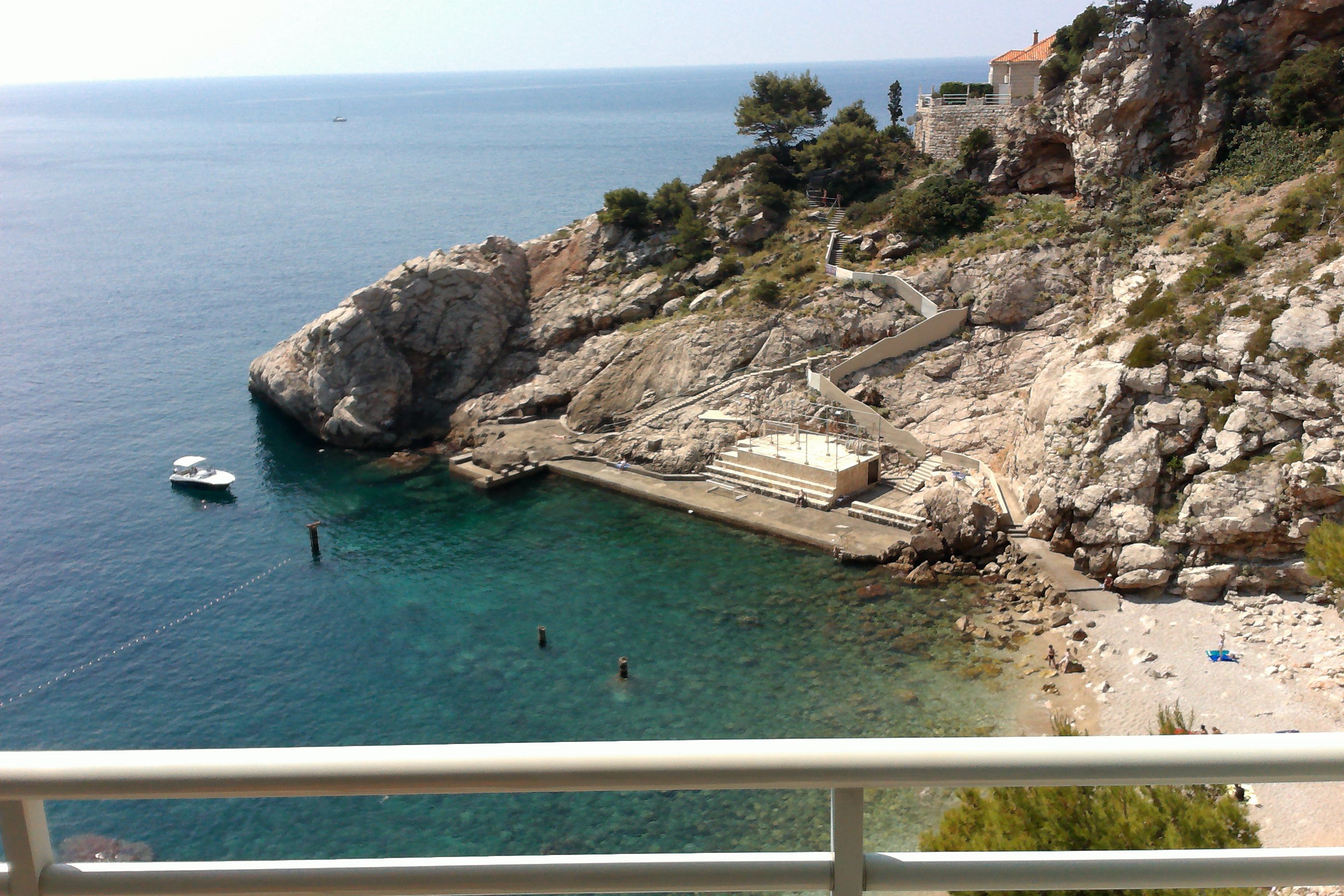
Of course, there are times when it’s much easier to be present than others. Sitting here on the balcony looking out over the Adriatic in the warm sunshine with beach sounds rising up from the happy people below, this moment is one crying out to be noticed.

But even here – or perhaps especially here – other thoughts soon come sliding in. The warmth, the peace and the gentle lapping of the sea are the perfect cocktail for contemplation. As the mind slows down, the endless loop of thought continues to unwind. There’s a small boat in the harbour, picking up passengers. I didn’t see it arrive even though it’s directly in my field of view. I must have been somewhere else.

Staying fully present is hard work.

Dubrovnik balcony view

It’s not that I don’t value thought. Creative thinking is the root of all human progress, and clearly we need it to function.

But most thought isn’t creative, it’s reactive, and if you’re like me you’ve probably had the experience of drowning in thought – your head so full and busy that you feel as though a fuse will blow.

When you feel that way too, try switching your attention to the present. Bring your focus to the Now. Listen, see, touch, feel the moment. Be here totally. Let yourself experience your own life.

If you were to ask me, I would say that, compared to presence, thought is a poor substitute.