Lost in Thought

I’ve read many books in my lifetime, but there are only a handful that are ‘stand outs’ that I will happily return to again and again.

One of these is ‘The Power of Now’ by Eckhart Tolle which has lived by my bed for several years now. Its simple message, that by living in the present moment all of our problems drop away, is not one that inspires everyone who first reads the book. If you are wedded to thinking, then it’s a message you won’t ‘get’ at first, and you might consider it misguided or irrelevant to everyday life.

Maybe though, like me, you will come to appreciate that the present moment is all we have, because it’s all there ever is. If you aren’t here now, where are you?

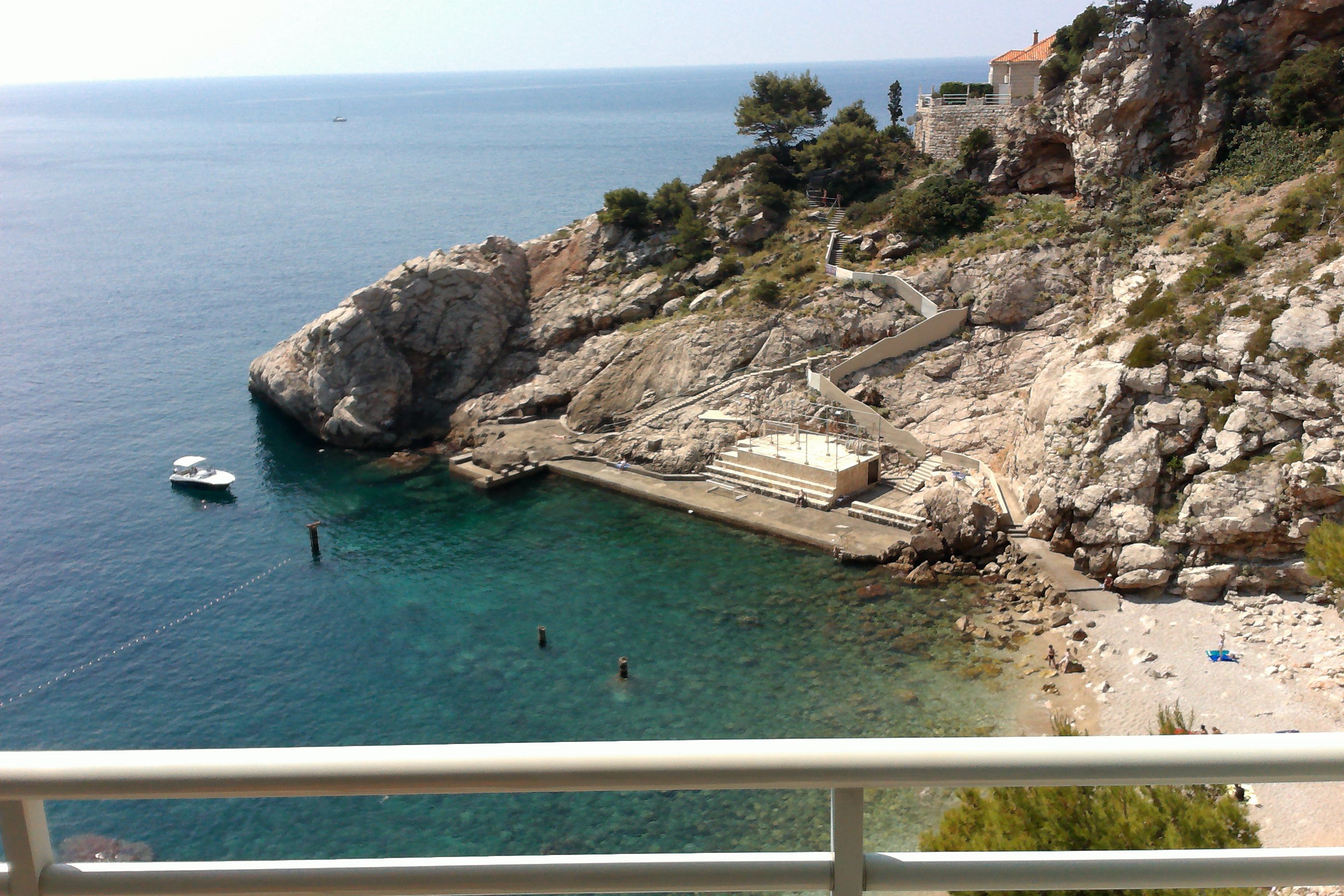
Of course, there are times when it’s much easier to be present than others. Sitting here on the balcony looking out over the Adriatic in the warm sunshine with beach sounds rising up from the happy people below, this moment is one crying out to be noticed.

But even here – or perhaps especially here – other thoughts soon come sliding in. The warmth, the peace and the gentle lapping of the sea are the perfect cocktail for contemplation. As the mind slows down, the endless loop of thought continues to unwind. There’s a small boat in the harbour, picking up passengers. I didn’t see it arrive even though it’s directly in my field of view. I must have been somewhere else.

Staying fully present is hard work.

Dubrovnik balcony view

It’s not that I don’t value thought. Creative thinking is the root of all human progress, and clearly we need it to function.

But most thought isn’t creative, it’s reactive, and if you’re like me you’ve probably had the experience of drowning in thought – your head so full and busy that you feel as though a fuse will blow.

When you feel that way too, try switching your attention to the present. Bring your focus to the Now. Listen, see, touch, feel the moment. Be here totally. Let yourself experience your own life.

If you were to ask me, I would say that, compared to presence, thought is a poor substitute.

Sarah is Mrs Bolt!

Sarah just texted to tell us they had arrived in Tucson, 18 hours after we dropped them at Heathrow. It’s 3.30 in the morning, and we’ve just woken to catch our own flight to Dubrovnik where we will recuperate from exertions of the last few days.

It was a great wedding. Sarah met James a few weeks into her Uni experience over 11 years ago. They roomed together as she completed not one but two degrees as she pursued her lifetime ambition of becoming a veterinary surgeon. Sarah Jervis, MRCVS is now Mrs Sarah Bolt and very pleased she is to be so. As proud parents and parents-in-law, we’re delighted too.

 Sarah & James Wedding

It seemed inevitable from the earliest days that Sarah and James would be a long term item. The two of them have an easy grace to their relationship that feels right. I’m sure they’ve had their ups and downs, but seeing them on Saturday, so obviously proud and full of love for each other, made the day a very special one for everyone who was there. We will all remember it for a very long time to come. Congratulations to you both!

How much money should I leave behind for my children?


This is a question that I was asked by a client recently, and as with many such questions, it’s a complex one to answer as it depends on your own personal views and values, as well as the personality and capabilities of the child.

When I thought about it further, I came to the conclusion that it’s actually the wrong question. You have no idea when you are going to die, what your future circumstances might be, how much wealth you may have, and what sort of person your child may grow into. I would therefore suggest that a much better question is to ask, “How can I prepare my child to make good decisions around money, to use it creatively and for the good of him or herself and society, and to avoid the bear traps and leeches that populate the financial world?”

There is plenty of evidence for the damaging effects that too much money too soon in life can wreak on young lives. Vorayud Yoovidhaya, the grandson of the founder of Red Bull was accused of the hit-and-run death of a police officer whilst driving his million-dollar Ferrari, and reportedly used his wealth to buy off the officer’s family and avoid prosecution. Brandon Davis, 32 year old oil heir and friend of Paris Hilton, is a regular in the tabloids for drug infringements and alleged nightclub brawls. Prince Pierre Casiraghi, son of Princess Caroline of Monaco, was accused of being “completely obnoxious”, insulting models and swigging from a $500 bottle of vodka after a brawl at a New York nightclub that left him in hospital. There are plenty of other examples.


For parents trying to deal with these excesses, views also vary. Gene Simmons, bass guitarist with American group KISS and reportedly worth $300 million, reportedly told CNBC “…in terms of an inheritance and stuff, (my kids are) gonna be taken care of, but they will never be rich off my money. Because every year they should be forced to get up out of bed, and go out and work and make their own way.”


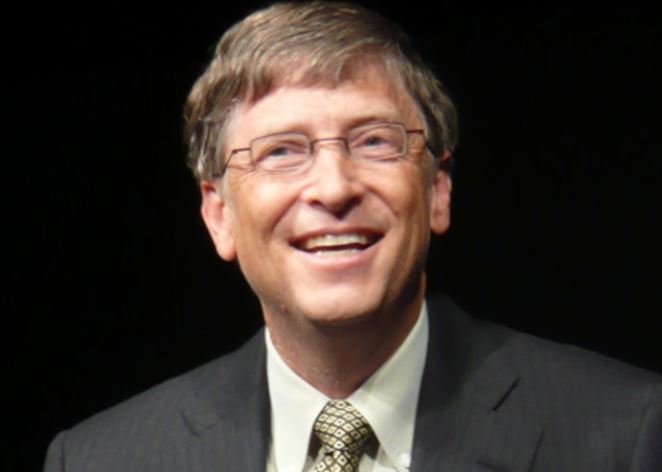
Bill GatesMicrosoft founder Bill Gates feels similarly. He said “I didn’t think it was a good idea to give the money to my kids. That wouldn’t be good either for my kids or society.” Instead, he and his wife Melinda created the Bill and Melinda Gates Foundation in 1994, which today has assets of over $37 billion.


Movie star Jackie Chan does not plan to leave his millions to his son, Jaycee. He told a reporter “If he is capable, he can make his own money. If he is not, then he will just be wasting my money.” Contrast that approach with young Suri Cruise, daughter of Tom Cruise and Katie Holmes, who at the age of six reportedly had a three million-dollar wardrobe, and whose mother was apparently planning to surprise her daughter with an eight foot, $24,000 Grand Victorian Playhouse for Christmas, complete with running water, electricity, and extensive landscaping.
These are, of course, examples from the extreme end of the wealth spectrum. Nevertheless, the range of sentiments which are expressed can apply to all of us who have surplus funds that our children may one day inherit. So how do we prepare them for that day?


Inevitably, the good financial habits of children are likely to be built on the foundation of the practice of their parents. But sometimes, those habits aren’t always recognised.


I had a conversation with clients a few years ago when mother expressed a desire to give her three children a significant sum so that they could each buy their own homes. I asked her what was important about making this gift to her. She thought for a moment, and then told me that she didn’t want her children to struggle in the way that she and her husband had done over the years.


I reminded her of a previous conversation when we had explored her values in depth. At that time, she told me of her pride in achieving her financial success as a result of having to struggle and make good decisions in the tough times. This, she had said, had been the making of her.


I didn’t need to ask whether she wanted to take this away from her children. She saw the point immediately.


I quickly told her that I didn’t disagree at all with her giving money to her children – she could easily afford to do so – but she should firstly be clear about whether the children were ready to receive it.


George Kinder refers to these issues extensively in his book, ‘The Seven Stages of Money Maturity’. He describes the first two stages, Innocence and Pain, and explains how it is necessary as part of life’s journey to feel the pain before one can move onto the next stage, acquiring Knowledge. If the pain isn’t there, neither is the incentive to do the work necessary for personal growth.


Financial knowledge is essential on this journey. It is common for the very wealthy to enrol their children in financial education classes at an early age, enabling them to be equipped to deal with complex decisions around investment, accounting and trusts as well as to understand the role of philanthropy and community service in a well rounded financial life. It is a fact that the financial literacy of many young people leaving school today is extremely poor. Many have little idea about how a mortgage or credit card works, what the stock market does or how companies and governments operate. The child who understands these things early in life has a clear head start when it comes to understanding and dealing with his or her parents wealth.


Kids PiggyPerhaps the starting point for your child’s financial education is to revisit your own. Are your financial habits and attitudes appropriate and taking you where you want to go, or do you need some further coaching or education? Have you written down your own attitude to money, wealth creation, borrowing, saving and investing? When your child asks a financial question, are you able to give a rounded response?


Is money a problem for you, or is it the solution to a problem? How comfortable are you with your own wealth? If you have some issues in these areas, the chances are your child will grow up reflecting your views.


At Chesterton House we seek to work with our clients and their families to address these issues over time. If you don’t have a relationship with a financial planner who can assist you in this area, there are lots of financial information websites that are a good starting point. You need to make sure, though, that they aren’t just a cleverly dressed up sales message and that they are offering genuine education. Take your time to research and find a source of help that chimes with your own personal goals and values.


If you need any help on this topic, let me know. I’ll do what I can to point you in the right direction.

Creating A Plan For Saving


You are well-established in your job, you’ve got an income coming in and you’ve set up a budget mechanism so you know how much you’ve got to spare each month. How should you now go about saving?

I’ve found it helpful to think about splitting your cash into three pots: short, medium and long-term money.

PotsShort-term cash is to pay for things you will need within the next year or two. If you’re saving for a new dishwasher, a car or the deposit for a house, you want to know that the cash is there when you want to spend it, so you’ll not want to take any risks with this money.

Included in your short-term cash pot is your emergency fund. There are always unexpected bills that come at you from nowhere, and you’ll need some surplus to meet these, or at least take the sting out of them.

Sue and I allocate money to different accounts for different purposes. We have a holiday account, a replacement account (to pay for the next dishwasher) and a tax account (if you’re self-employed this is likely to be your biggest bill by far). We pay into these accounts each month, and we know how much we can spend on these items by how much is in the account. Many banks will set up ‘sub-accounts’ for you so you can manage your money in this way.

Medium-term cash is money you don’t expect to need at short notice, indeed you may not have any immediate ideas about what to spend it on, but you don’t want to tie it up for a long time. If you’re thinking of buying a house or starting a business or a family a few years in the future, or you just want to start accumulating money that is generating a better return, this is the place.

Whilst you don’t want to lock this money away, you do want to get better returns on it, and this means considering investments other than bank and building society accounts. The obvious solution is to use managed funds investing in stocks and shares and similar holdings, because these have the potential to grow faster than inflation and provide a real return on your money.

We’re not going into detail about these investments here, and there are some things you need to think about in creating your plan. As a general principle, though, you should be allocating about a third of your savings to this pot.

Your long-term cash pot should account for the remaining third. Think of this as your ‘Financial Freedom Fund.’ It’s money you’re never going to spend, although at some point you may begin to draw an income from it. The obvious first port of call for most people is to invest this money into a Pension Plan. There are two reasons to use a pension for at least part of this pot.

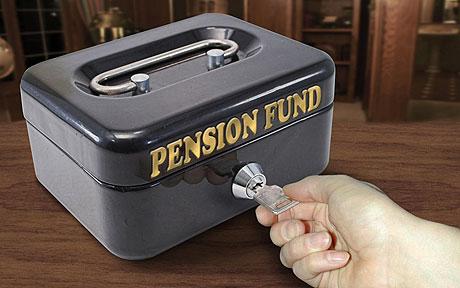
Firstly, pensions are just about the only remaining tax haven available to most of us. The generous tax reliefs they attract mean that, over time, your pension savings are likely to build into a bigger sum than equivalent sums invested elsewhere. Probably more important, though, is the fact that once money is inside your pension plan you can’t get at it. This sounds like a really big disadvantage, but take it from me, this is a huge, huge benefit.

Pension fund

Time and time again I sit down with people for whom their pension fund is their only significant asset. Despite their very best intentions, they dipped into and spent all of their other savings. I’ve found this to be universally true whether the individual works on the shop floor or is the person running the company. The only difference is that the company owner usually has more trinkets – a bigger house, car, holidays, etc – but their pension fund remains the most valuable thing they own by far.

Of course, if you have real self discipline and are focused tightly on your Financial Freedom goal, then this advice may not apply to you. I thought it didn’t apply to me, either. But I can tell you that, for me too, my pension fund is my biggest liquid asset. Enough said?

So here we have a simple framework on which to base your long-term savings plans. By splitting your money into these three pots you will have established some guidelines that can carry you forward over many years. There is still a lot you need to know to make the most from your money decisions, but now you have a track to run on.

Beauty And The Beasts

As our plane gains height above Naples we get a fantastic view of the lights of the city spreading out before us, the dark shadow of Vesuvius just visible in the background. The last night-time takeoff we experienced was at Los Angeles, and we remember being impressed by the clearly laid out grid structure, each ‘block’ in sharp definition. Here perhaps it’s no coincidence that the city from the air resembles a plate of spaghetti, with the sodium lamps even adding the hue of tomato sauce.

So what are my impressions of Italy after our first visit?

It’s tempting to continue the American comparison, not least because the place is full with Yanks. I’m sure that Sorrento, our home for the last week, is no more representative of Italy than L.A. is of the States, but it’s all I’ve got. I’m sure you’ll draw your own conclusions if you’re familiar with the country.

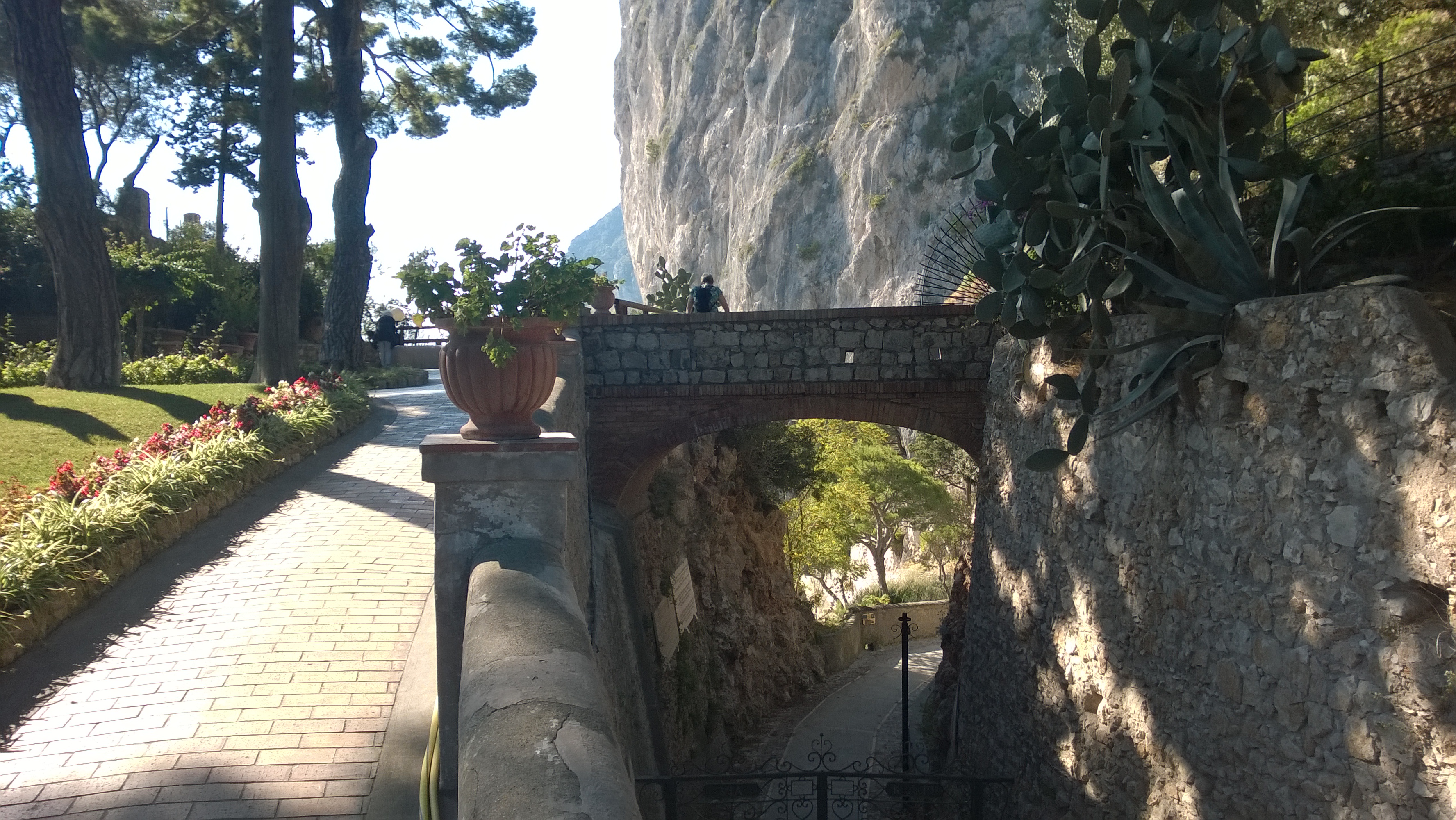
Sorrento and the Amalfi Coast are very lovely to behold. Yesterday we took the boat to the island of Capri, probably the jewel in the area’s glittering crown. Riding the chairlift to the highest point on the island was an amazing experience, and the views from the top were stunning, not least the near 2,000 foot sheer drop to the sea below. The limestone cliffs, the sun reflecting off the azure sea, the multicolored buildings below – if you’ve seen it you’ll know what I mean, and also agree that words can’t do it justice.

Capri View

Capri View

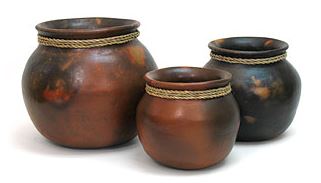
One reason that the Americans come here in droves is clearly because of the antiquity of the place. In San Diego, California, our bus driver proudly showed us the City’s oldest building, dating back to 1850. Here, our walking tour of Sorrento included a visit to a pub proudly displaying a portion of original 2,000 year-old Roman wall in its basement along with a number of earthenware pots discovered during renovations. It could easily have been part of the pub run by the landlords’ ancestors.

Of course, many Americans have Italian roots, their own ancestors moving continents only a generation or two ago. No wonder they want to explore their past.

It’s no wonder either that Americans are so entrepreneurial given our experience in Sorrento. Every restaurant, it seems, has a staffer stationed outside ready to explain why you should visit their establishment, pushing a menu into your hand whilst pointing out the chef’s recommendations. Every shop beckons you inside, and they all have their sales pitch. Capitalism is in full swing here.

So why is Italy apparently in such economic trouble whilst it’s sons and daughters in the US are racing ahead?

I don’t know the answer to that one, although I suspect it is to do with a combination of politics, Eurozone austerity and demographics. However one factor that I’m sure is a contributor is the absence of the large corporation.

In America the streets are dominated by the big chains, from McDonalds’ to Applebee’s, from Days Inn to Marriott, and from Starbucks to Dunkin Donuts. Here there is no sign of any of them. On the contrary, every establishment we visit seems to be owned and run by a family, anxious to please and committed to great service. It’s one of the features that makes a visit here so enjoyable.

We order some bottles of Limoncello, the delicious local liqueur speciality. We are served by Roberto, who proudly tells us that he is the sixth and youngest child in his family. His parents run the farm that supplies produce to the shop, whilst his sister manages the fashion store across the road that is another family venture. He seems very happy, with no plans for world domination. This is a family business, not a corporation.

I’m intrigued by this so I look up the statistics. According to a report from PwC, in 2014 American companies accounted for 47 of the top 100 firms in the world. Italy had 1, Eni Spa whose oil and gas business was ranked 92nd (the UK had 6). I’m not at all surprised.

Now I’m a fan of business, and I understand that they need to grow to survive. But I have to say that it would be a real shame if Italy – or at least the bit of Italy we got to see – got taken over by mega-corporations. It’s happened elsewhere, not least in the States where many people lament the loss of the ‘mom and pop’ stores that used to be the backbone of small town retailing across America, squeezed out by the Wal-Mart’s and the Safeway’s.

Ultimately it will be the consumer who chooses where and with whom they want to shop, and times of austerity make it easier for the retail big guns to attract business, so who knows what the future may bring.

But I suspect that, so far as Sorrento and the Amalfi coast area is concerned, it will be business as usual for a while yet. So if you haven’t yet discovered this lovely area, come and visit Roberto and friends. I’m sure that, like us, you’ll get a very warm welcome.


The Loveliest Coast In The World

Tuesday, 28th October 2014

Roger Moore’s house is beautiful. It’s a white painted villa set in the cliffs near Amalfi, with a stunning setting and amazing views across the Mediterranean Sea.

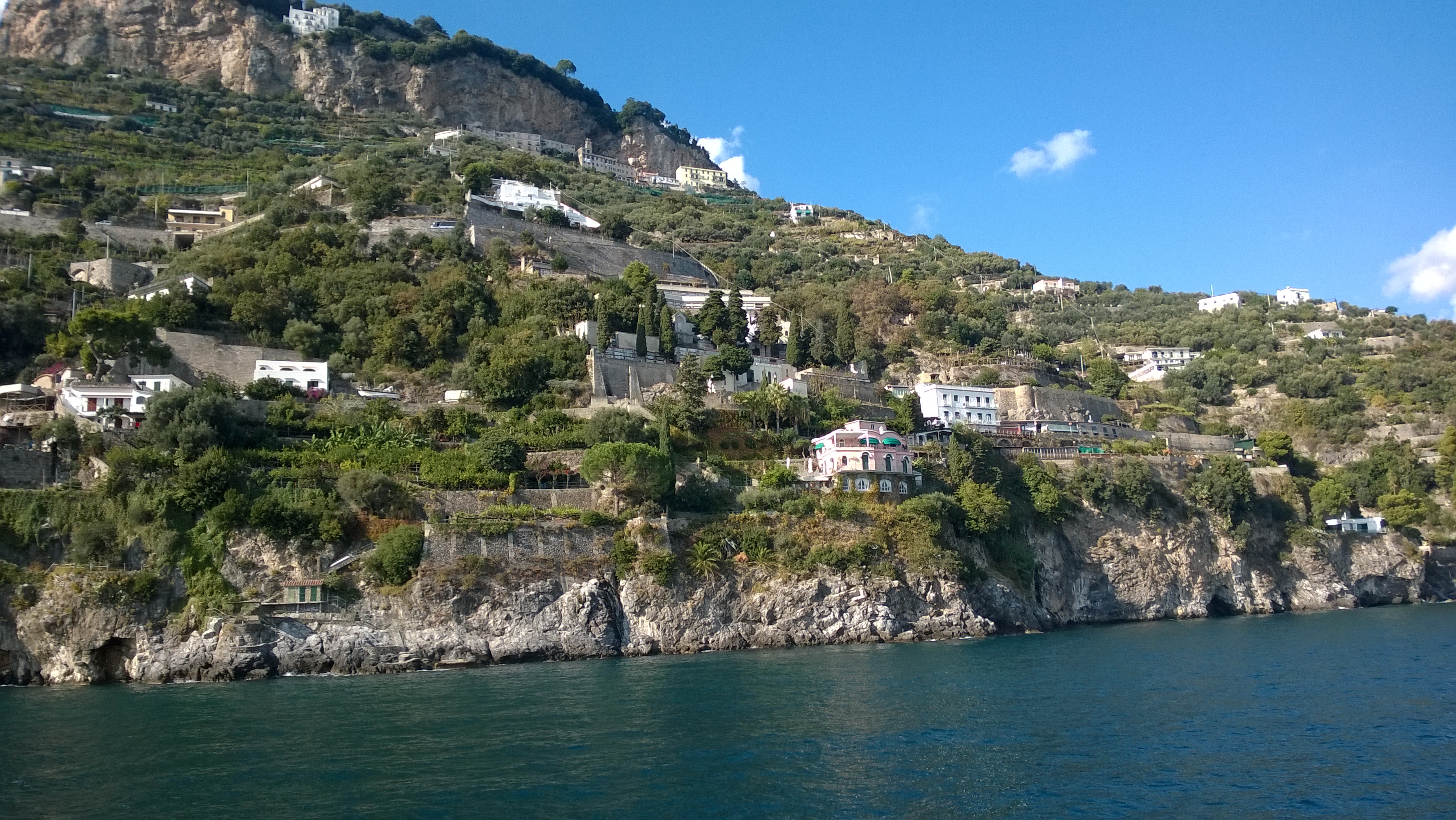
It pales besides Gina Lollobrigida’s pink painted home, however. And that in turn looks small next to Sophia Loren’s lovely villa atop a crag, framed by the glorious Amalfi mountain coastal backdrop. And looking down on them all from on high is Gore Vidal’s white mansion, all 70 million euros worth of it according to our skipper.

The Amalfi coast is generally reckoned to be the most gorgeous in the world, and we’ve come out by bus and boat to see for ourselves. We’re strongly inclined to agree.

Gina, we love your house!

Gina, we love your house!

We’ve driven across from Sorrento, following the coast road to Positano, Amalfi and Ravello. At Amalfi our guide has arranged a boat excursion to view the coast as it should be viewed, from the sea. And what a fabulous view it is.

It’s the complexity of the scene that is its key. The multi-textured cliffs are full of interest, changing constantly as layer builds upon layer. Interwoven into the cliffs are houses, villas, churches and other buildings forming a riot of colour. Added to them are the vineyards, rosemary gardens, inlets, caves, crags and beaches that have been threaded into the picture like silks in an intricate embroidery.

I’m reminded of the coast of Southern Ireland that I visited last year. That was glorious for its emptiness, its remoteness. Here the contrast is clear. The beauty of the Amalfi coast is in its vibrant humanity, its ancient relationship with the peoples of the area, and its modern-day connection with the beauty and confidence that is Italy.

I could write a lot more about it, and many others have done so. But there are some places that you just have to experience to understand. Here is one of them.

Sharpen your passport now.


The Biggest Bang in Europe

Monday 27th October 2014

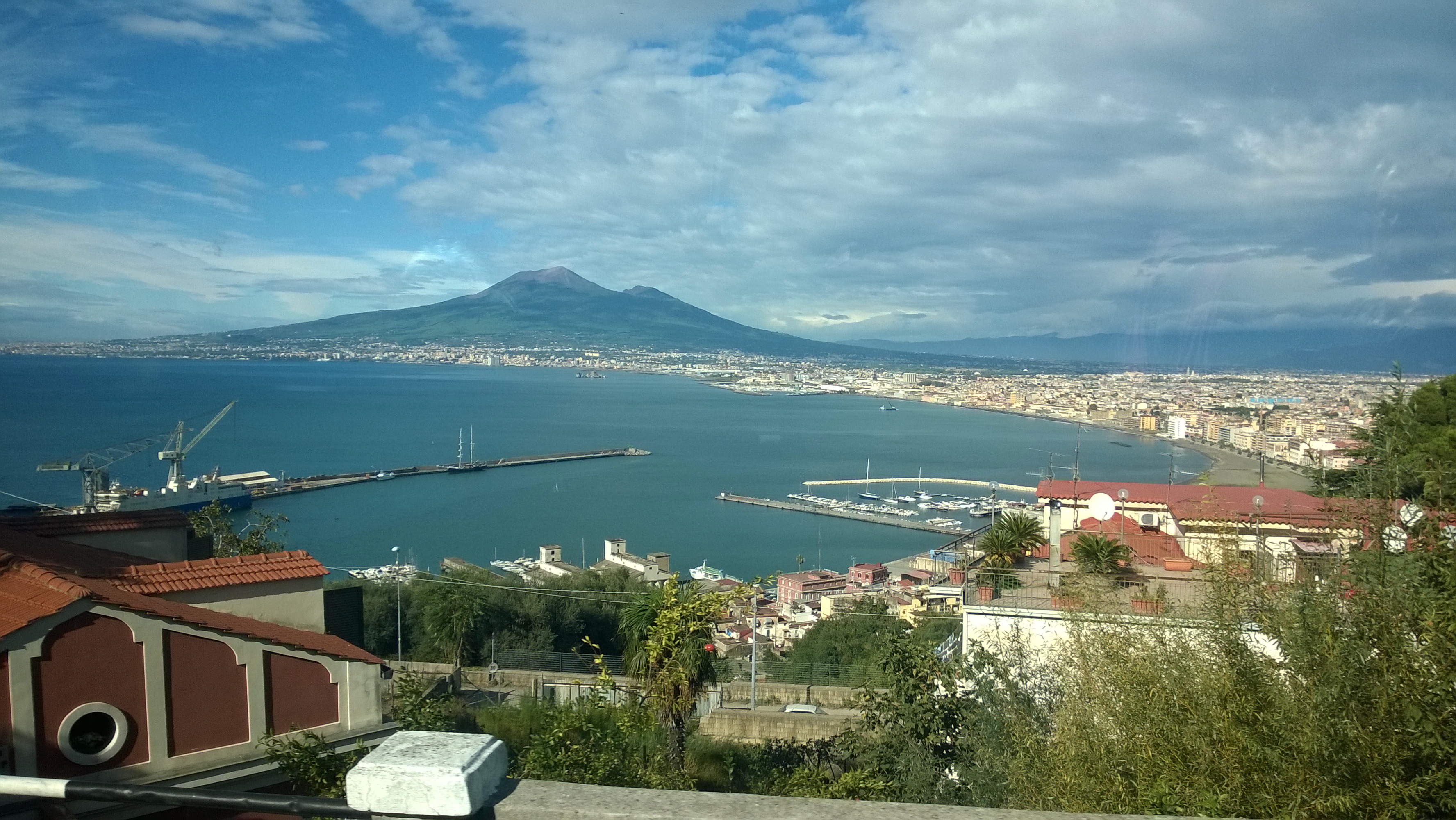
Steam is rising in gentle plumes from the rock face. It’s evidence of the heat that’s present several kilometres below, gradually building in intensity. We’re standing on top of the release valve of a gigantic pressure cooker, and one day it’s going to blow. When it does, the results will be spectacular and lethal. This is Vesuvius, Europe’s biggest active volcano.

It last went off in 1944, but notable as that eruption was, it was a mere fizzle compared with the most famous bang in the year 79. Apparently on that occasion 1.5 million tons of rocks, earth and ash spewed out every second for days, reaching over 20 miles high before it started falling to earth. There was enough material to cover the whole surrounding area to a depth of many metres, including the complete town of Pompeii which would remain buried for another one and a half millennia.

It’s probably appropriate that we’re here a week before Guy Fawkes night, because that must have been the firework display to end all firework displays. And we’re standing right on its top lip, looking down at the blue touch paper.

We’ve come up the lower slopes by 4×4 bus, feeling as though we’re in an Indiana Jones adventure as we bounce and lurch from pothole to pothole along the rough mountain track as we climb the peak, often inches from a sudden rapid descent as we peer down to the valley below. Our last few minutes are on foot, kicking through the grey ash that this mountain seems to be made of. We reach the summit to find the inevitable wooden shack selling volcanic gifts, postcards and Coke before we meet our guide who explains in heavily-accented English the main features of the volcano.

There are two adjacent peaks that are part of the mountain, he explains, Vesuvio (as the Italians know it) and Monte Somme sit alongside each other. Volcanologists now believe that instead of forming two separate channels with Vesuvio being the source of the AD 79 eruption, they are instead both what’s left of a much bigger, single peak that was massively reduced in size by the scale of the explosion. Considering the amount of material that was launched skyward it’s a theory that’s easy to believe.

What strikes me as we gaze down into the huge caldera is the perpendicular nature of the rock face. It’s clear that this is the visible end of a huge pipe, and I get a sense of the massive pressure behind the eruption as it forced upwards and outwards from its start point many, many miles below.

Caldera posing

Caldera posing

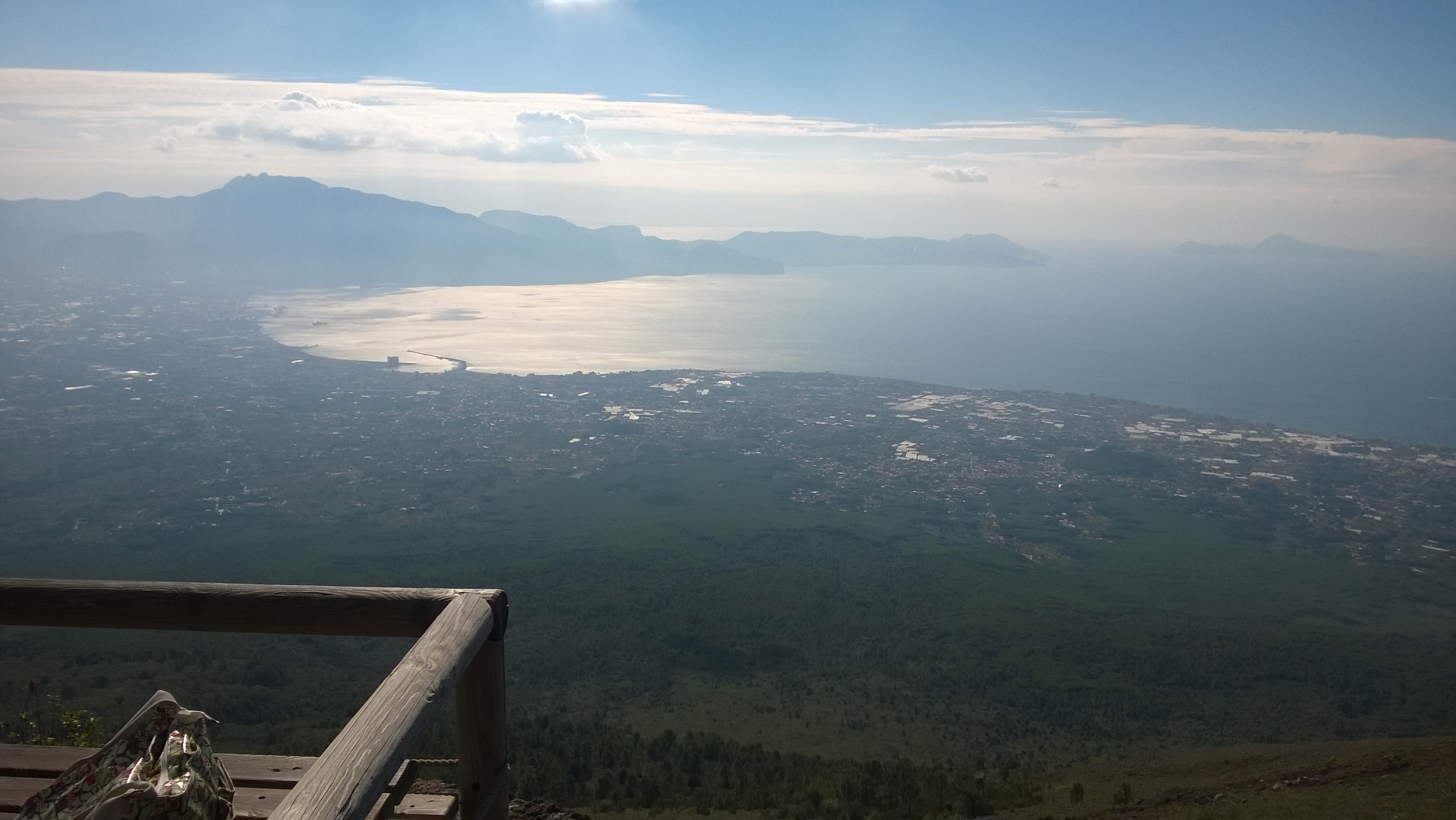
The views from the top are magnificent, with the panorama of the Bay of Napoli stretching away to the west, and the Monti Lattari – the Milk Mountains – to the south-east. It’s a lovely sunny day and our guide points out Pompeii, 8 kilometres away. Despite being impressed by its scale when we visited a couple of days ago, it looks insignificant now, swallowed into the heavily built up landscape.

Adding to the beauty of the vista is the heavily wooded National Park land adorning Vesuvio’s slopes. This, we learn, is a deliberate ploy to limit the number of people within the volcano’s immediate vicinity, part of the evacuation master plan in case the numerous sensors and monitors strategically placed around the caldera start to give their warning signals.

Sorrento coast from Vesuvius

Sorrento coast from Vesuvius

On the return journey we stop for lunch at a winery located on the lower slopes, in the mountain’s shadow. They proudly tell us the history of their wine, a family business since it began in the1940’s. They’ve obviously grown up living with the threat of possible annihilation and don’t seem concerned by it. This is their home, just as it’s home for another million+ people within the bay area. Judging by the density of development just a mile or two away, when the next big bang finally comes – as it inevitably will – that evacuation plan is going to have to be pretty slick.

Let’s hope it doesn’t have to be tested in our lifetimes.


The Empty Streets of Pompeii

Saturday, 25th October 2014

It’s a man, stretched out on the ground. His hands are to his mouth, fighting for breath. He’s been in this pose for nearly 2,000 years, since the day in 79AD when the sky fell in.

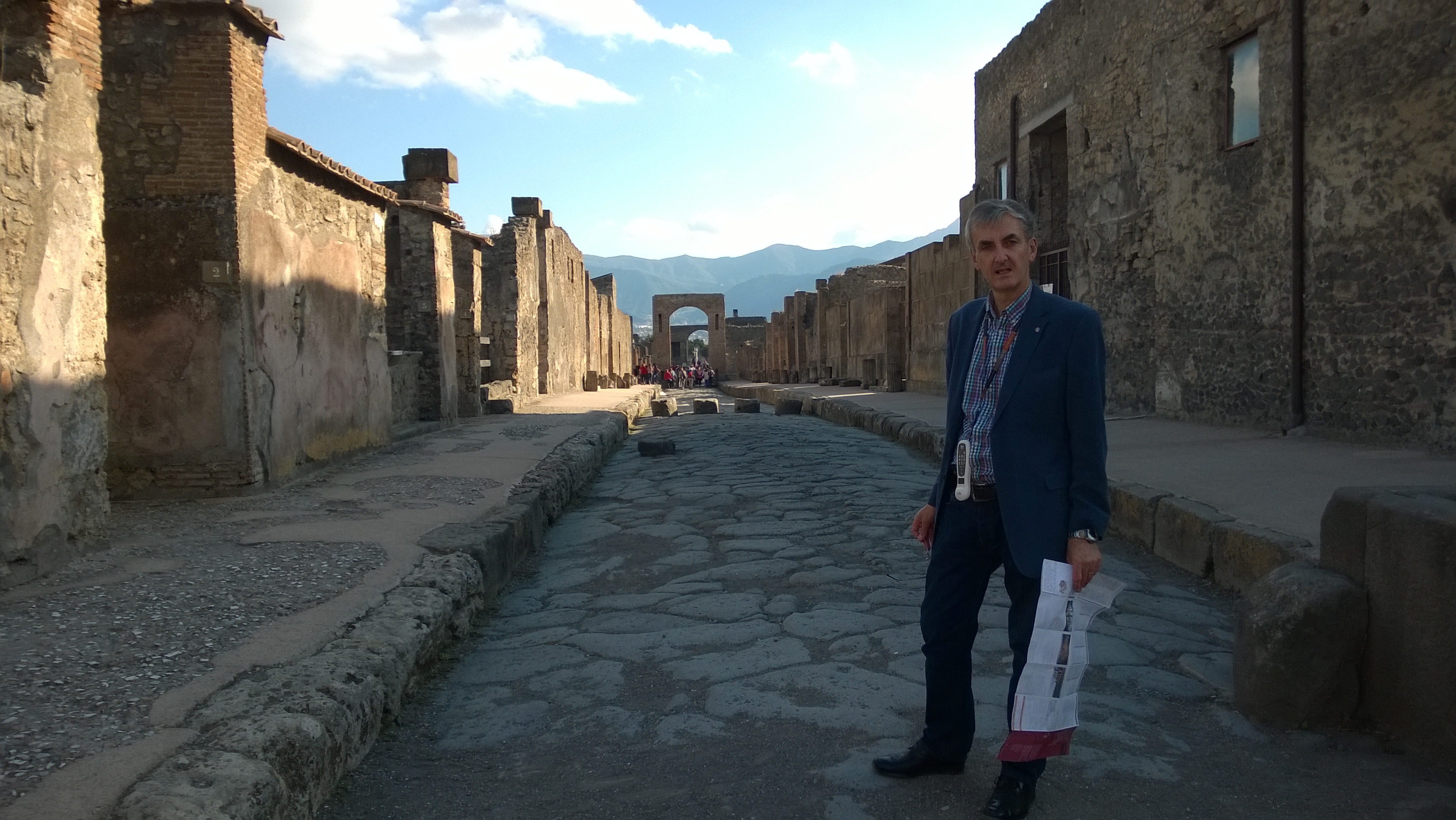
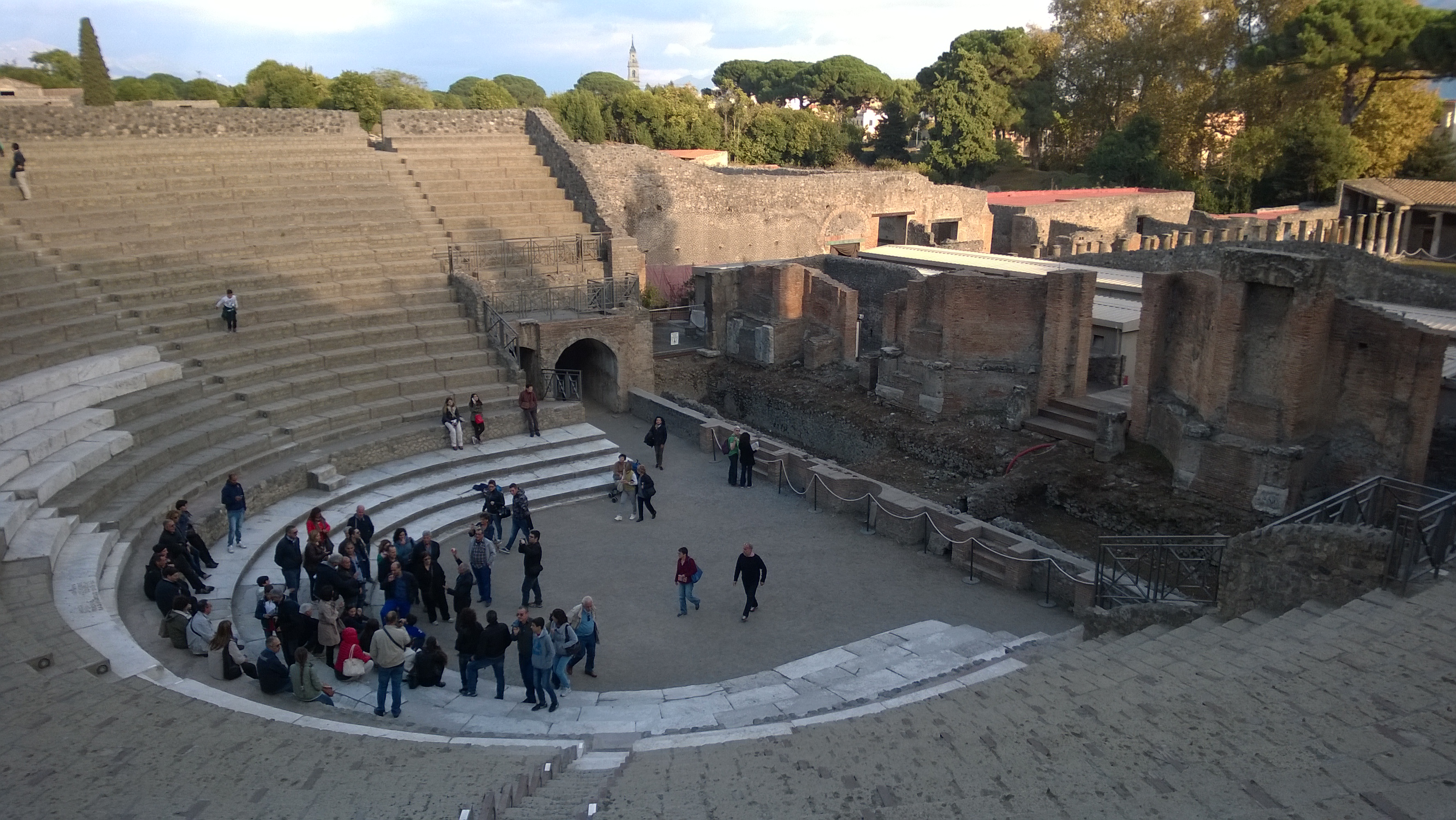
The sight leaves us with mixed feelings. We’re fascinated by the antiquity, and by the drama of the story of life suddenly cut short for thousands of people as a result of this most famous of natural disasters, but at the same time we feel like interlopers, voyeurs on the moment when a whole town was obliterated in minutes. Pompeii is a grand mausoleum, a monument to its residents who died that day. It’s a huge site and amazingly preserved, but it’s sterile and curiously silent, with grey walls and fragments of Roman tiles where there were once people, smells and noise.

Pompeii street

Pompeii street

Our experience of Pompeii stands in contrast to our journey to find it. We weave through the vibrant streets of Sorrento, dodging people, cars and the ubiquitous scooters thronging the roads like noisy insects. We negotiate the hordes to buy our tickets and catch the train, arriving early to a half empty carriage that gradually fills with young people as the departure time nears. We guess they are just out of school – it’s early afternoon – and like most young teenagers they are boisterous. The volume rises as the babble grows.

We set off towards Naples past busy apartment blocks, washing lines full to overflowing. One false move with a clothes peg means certain loss of lingerie as it plummets to earth several floors below. The impression is of life being lived, in all it’s daily grime and glory.

The train speeds us on its way, making numerous stops at which teenagers leave and enter, along with men in suits, men in overalls, women with designer bags and designer children, and old people with walking sticks, all off to who knows where. By the time we reach Pompeii it’s standing room only. It reminds me of London Underground, especially when we go through the numerous tunnels that line the route.

The entrance to Pompeii is a short walk from the ‘Stazione’, and the approach road is lined with alfresco restaurants. “Come in to our garden,” pleads the swarthy sentry outside one of them, “bring your…. money!” He grins widely and we accept, admiring his honesty. The garden is indeed pleasant, with a lovely herb garden at the rear making for a delightful feature on this pleasant late October afternoon.

So the contrast once we enter the impressive walled city is stark. We’ve been told that Pompeii is huge, but we didn’t begin to appreciate it’s scale until we experienced it for ourselves. The streets go on for what seems like miles, the buildings are overwhelming in their number as well as their state of preservation, and there are high points including the amazing amphitheatre and the two-millennia-old frescoes. We’re glad we came.

Pompeii amphitheatre

Pompeii amphitheatre

But comparing notes afterwards, we both had a real sense of being intruders, as though we shouldn’t really be disturbing these ancient stones. We realise that we needed to visit to understand it, and reading about it later we appreciate the huge wealth of knowledge that this place has revealed about daily life in an important Roman town at the time of Christ. But neither of us feels especially drawn to return.

In the evening we find a family restaurant in a side street of Sorrento where the host again pulls us in with his enthusiasm. As we enjoy our meal whilst he entertains his guests with his version of ‘My Way’ accompanied by his friend on the guitar, we reflect that life is for the living. And perhaps Pompeii should be left to the historians.

My first visit to Italy – again!

Friday, 24th October 2014

I get the distinct feeling that I’ve been here before.

The flat landscape densely populated by cultivated trees with a periodic patch of tightly spaced vines filling in the gaps. The brick, gold, russet and amber coloured farmhouses dotted amongst the orchards. The sense of every spare centimetre of land having been put to productive use. And the long, arrow-straight road cutting directly through the middle.

Except that last time I experienced these things the trees were almonds, not olives. The cars were big Dodge and Ford trucks, not Fiat 500s and Opel Corsas. And the signs were mostly in Spanish, not Italian.

The similarity, though, is striking and it doesn’t abate as we climb into the hills. Even the huge bank of wind turbines stretching across the hills were present in California.

We’ve landed at Bari airport on the eastern side of Italy, flying in over the Adriatic. We should have been heading for Naples, but they’re on strike and Thomas Cook has taken the decision to divert. Neither our fellow passengers nor the ground staff seem to have heard of Bari, much less know where it is.

But we’ve arrived and filtered through the airport. We get the impression that an international arrival here is a big event, but perhaps that’s unfair. They’ve clearly seen planes before. Perhaps it’s tourists that are new.

All credit to Thomas Cook, the whole thing runs seamlessly. We are welcomed out of the airport and guided to our coach by the helpful and bubbly Andrea. “I’ve never been to Bari before,” she chirpily informs us as we set off, “and don’t make me come again!”

The main difference between here and California Central Valley is that here it’s heavily overcast and a bit chilly. “It’s beauuuuutiful in Sorrento,” Andrea informs us as the rain starts to batter the coach windscreen, clearly not appreciating her excursion.

Together with a comfort break at a motorway service area (much the same wherever you go) it’s about four hours in the coach to add to the three spent in the air. But for me I find this opportunity to witness the different landscape in the east, and the journey over the hills to the Amalfi coast as very much part of the experience. Thank you, Neapolitan strikers.

The foothills rising up from the plain are again reminiscent of our drive across California a couple of years ago, as the rich farmland turns into rolling hills and green slopes. But as we carve deeper into the country, the landscape changes. The patchwork of colours, the intensity of the land, and especially the frequency and design of the buildings start to take on a distinct feel, looking much more like the Italy I might have expected. Villages cluster atop some of the hills like barnacles in a very unAmerican way, houses jostling for space as they cling on to avoid dropping off the tops into the valleys below.

We reach Avellino and the hills have turned to mountains, meaning less cultivation as the trees become a tangle of dark green foliage instead of neat rows of olives, and the buildings cluster the sides and base of the slopes as they abandon the peaks. We stop for a break, and soon after setting off again I’m struck by the unusual shape of one mountain, curious ridges running down its sides as though it has been concertina folded. As I’m pondering how it acquired this design, Andrea picks up her mike to fill me in. We are passing Mount Vesuvio, most famous of Europe’s volcanoes. That explains it, then.

The Bay of Naples

The Bay of Naples

We skirt Naples, a jumbled riot of concrete spreading across the Bay area. Again every spare metre of land is occupied, this time by a block of homes, all appearing to have a line of washing hanging outside. The buildings aren’t in great condition, in fact the vast majority could do with a repaint and some repair work. Andrea tells us that Al Capone’s parents came from here, and despite the beauty of the bay as it conjoins with the sea and the mountains it’s clear that this is a land of contrasts for the people who live here.

We head towards Sorrento and our coach enters a series of tunnels. We emerge from the last one into a land that’s different again. This is the scenic Amalfi coast that poets and princes have visited for centuries to find their inspiration, and it’s why we’re here too. The view across the bay is outstanding, the sky is blue and the road is tortuous as it grips the coastline. Sorrento awaits. Our holiday has begun!


My Dad Rides A Motorcycle

In May 2014 my dad and I journeyed to Germany together by motorcycle. Here’s the story of our trip.

I’ve always been into motorcycles. At 15 I used to devour all the bike magazines, and although my dad didn’t have a bike himself he certainly didn’t discourage me. He would recount how he and my mum had journeyed to Italy on honeymoon on his 600cc Panther, the long-stroke single seemingly firing every lamppost.

Decades on, motorcycling has given my dad a new lease on life. Five years ago he signed up for ‘Enduro India’, a 2000 km ride across that country on locally built Enfield India bikes almost identical to the 1950’s British Royal Enfield singles on which they were based. To prepare for the trip he bought an Enfield to use at home, and was back on a bike after a gap of 50 years, apart from occasional short trips on my brother’s Yamaha trail bike. The trip gained him a whole new directory of friends with a common passion and a shared experience, and they obviously took inspiration from his presence and energy, bearing in mind that he was 20-40 years older than most of them (he was born in 1928, you work it out).

Five India trips later, including one to traverse the world’s highest road across the Himalayas, you could say he is a seasoned biker. His exploits make me feel like a rank novice, trailing in his wake.

We took a family trip together to Ireland last September, my dad, brother and I, having a great time biking around the Ring of Kerry. And now here I am with him, sharing a hotel bed in a room overlooking the Mosel river near Bernkastel-Kues in Germany.

We take our time on the road, cruising at around 55-70 mph. At 60 my KTM feels relaxed and barely off tickover, and Dad’s 750 Moto Guzzi is similarly unstretched. Our sedate pace is reflected in our frugal fuel usage, with over 200 miles before my low fuel warning light appears – thrashing around Leicestershire it’s been down to 135 miles on a tankful before now.

Not everyone is so slow. Heading towards Dover a brace of Harley Davidson’s come thumping past, their pilots adorned with the cut-off denims long associated with the marque and proudly displaying their ‘Hells Angels Holland’ tribal moniker. They must think that, with our high-vis fluorescent yellow bibs, we’re a couple of wimps. Little do they know!

The deep, resonating rumble of a pair of Harleys in flight contrasts with the screaming banshee that startles us near Mons in Belgium. Too fast to identify, the rider has his right leg extended in the form of greeting used to signify the universal camaraderie of two wheelers on this side of the channel as he weaves through the four-wheeled detritus at 100 mph plus.

In Germany, it’s the BMW saloons that come past like demons. A glance in the mirror shows a clear road for miles behind, but seconds later the bike is rocked sideways by the pressure wave from a car that must be doing 120 mph or more. He’s soon out of sight and clearly not enjoying the view.

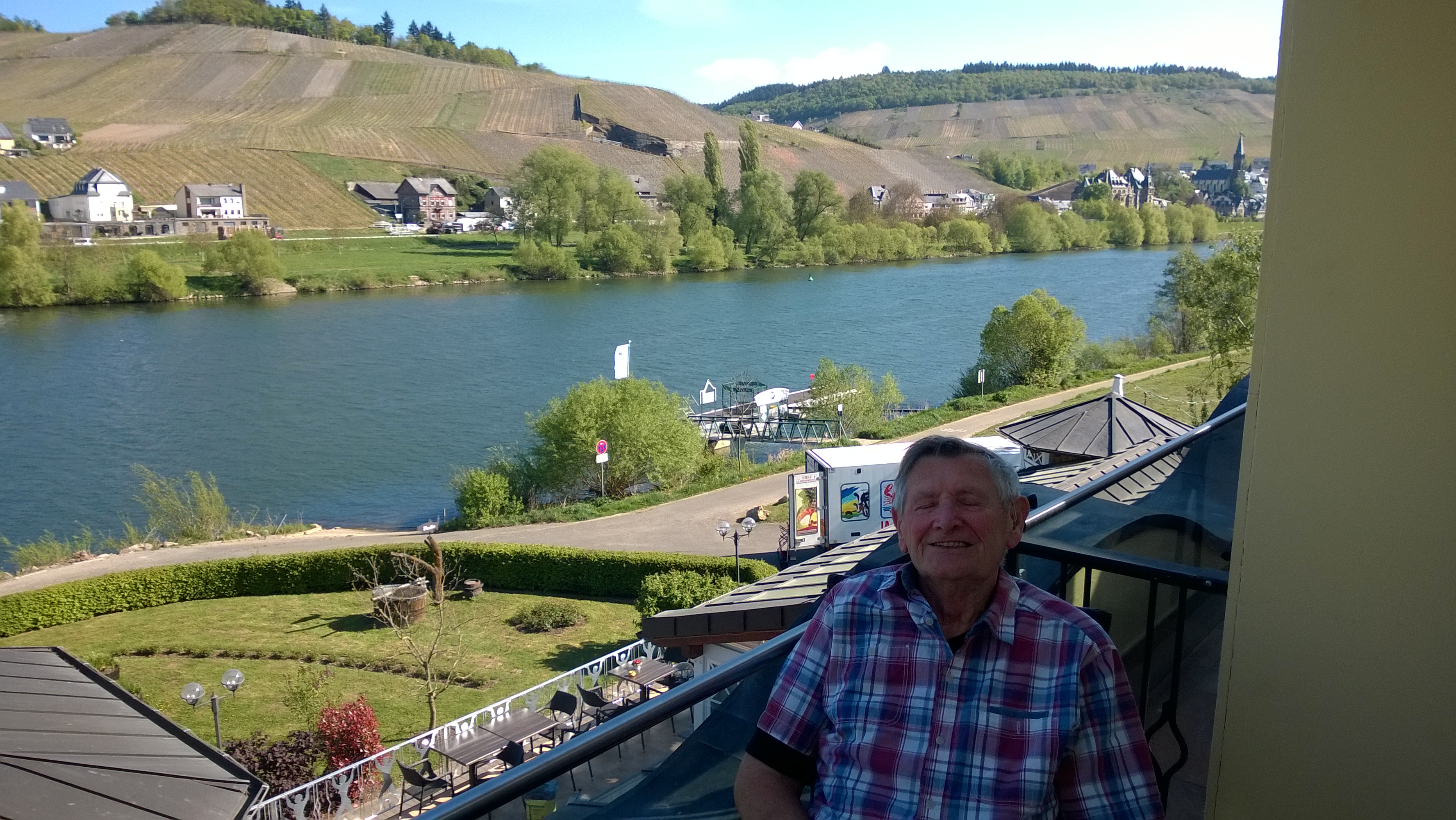
Which is a shame, as there’s lots to enjoy, especially here in Rhineland. We’ve arrived at the Weisser Bar, or White Bear, Hotel which is owned by Dad’s former employer, his main engineering factory a few metres further along the riverside. They have a long-standing and mutually appreciative relationship, and Rolf proves to be a warm and gracious host. Last night he was christening a newly-installed barbecue cooking device, and we joined him and a group of his workers to enjoy roasted wild boar in the hotel restaurant. Thick slices of distinctively flavoured meat with a never-ending flow of delicious local wine make for a memorable meal, and the language barrier only adds to the fun. We eventually depart to our room to savour a beautifully calm, peaceful night from the balcony, the Mosel shimmering like glass in the moonlight.

Today we’re heading back to Lille via Luxembourg. We’ve opted to go cross-country, although it’s hard to avoid motorways altogether on this vast continent without slowing journey times to an unacceptable crawl. We begin, though, with the serpentine road alongside the Mosel to Trier.
The Mosel from our hotel room

Like most German roads, this one is smooth as silk and a pleasure to traverse. It is also accompanied by superb views as the Mosel wends back to it’s source, and this morning’s crystal blue sky brings out the magnificent colours in vivid style. This is wine country, and we pass countless vendors offering their sweet, lemony white nectar that is the speciality here. We’ve already ordered ours from Ulrike the previous day, a long time acquaintance of my father’s who had plied us with samples before taking us down to her cellar to show us the 1000-litre barrels that have harboured her family’s endeavours over 250 years of wine production. Mosel wine favours sunny years as they bring out the sugar in the wine, helping to enhance the sweet acidity that is it’s hallmark. Best years, she tells us, were 1976 and, before that, 1959. She is keeping some bottles from that year to celebrate her 60th birthday in a few years time. She’s obviously of a good vintage, I tell her. The wine will be delivered soon. If you’d like to sample her multi-award winning varieties just type Dr Leimbrock into your search engine and you’ll find her.

The intimacy of the Mosel road turns into the impersonality of the main highway to Luxembourg, and then on towards Liege and Namur. We turn off at Neufchatel on to the N40, cutting the corner off the route but substituting a steady and relaxed 110 kph for a 90 kph trundle through the countryside, slowing to 50 kph or less through the many small towns and villages.

Arrow straight for the most part, we ride a section that swings through bend after constant-radius bend, under the trees, past rivers and streams, up slow rises and down again, for what seems like forever. This is motorcycling nirvana, and if you’ve never experienced it I pity you.

Eventually the N40 gives way to the autoroute around Valenciennes, then on to the madness of Lille in the evening rush. We enter the city with a clear idea of the way to our hotel, having studied the internet map and made copious notes. All are to no avail as we immediately get lost with only a vague idea of our direction. Fortunately signs point to each of the many hotels and we eventually find ourselves perched on the roadside outside the Best Western, our pre-booked choice for tonight. Only when we check our trusty smartphone map do we realise that there are 3 Best Western’s in Lille and this is the wrong one. Fortunately the correct one is only a few streets away and we find it soon, although finding their private car park (“eet’s really very simple” says the very helpful Maureen on reception) sees us revolving around the Grand Place several times.

It’s a modern, funky hotel and we enjoy a great meal at a frenetic street restaurant before retiring to an early-ish bed. It’s been a hugely enjoyable motorcycling day, easy yet demanding. Riding a motorcycle at any kind of speed along unknown roads requires a form of complete concentration that is tiring yet therapeutic, and although sleep comes easily it is accompanied by a flow of images recalled from the day’s activity. I thoroughly recommend it.

Tomorrow is an early start to catch the ferry, still an hour and a half away, and a long ride home on reportedly the busiest motorway day of the year. But that, as they say, is a story for another day.